Arctic resilience in its most human form
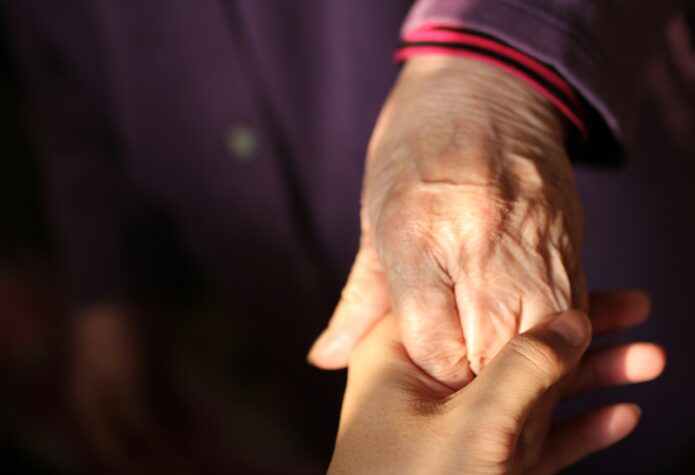
In Reykjavík, Reitir is turning a former airline headquarters into a nursing home, and Heimar is expanding an existing one. Both projects are financed by NIB, and both strengthen the care infrastructure that a resilient Arctic society depends on.
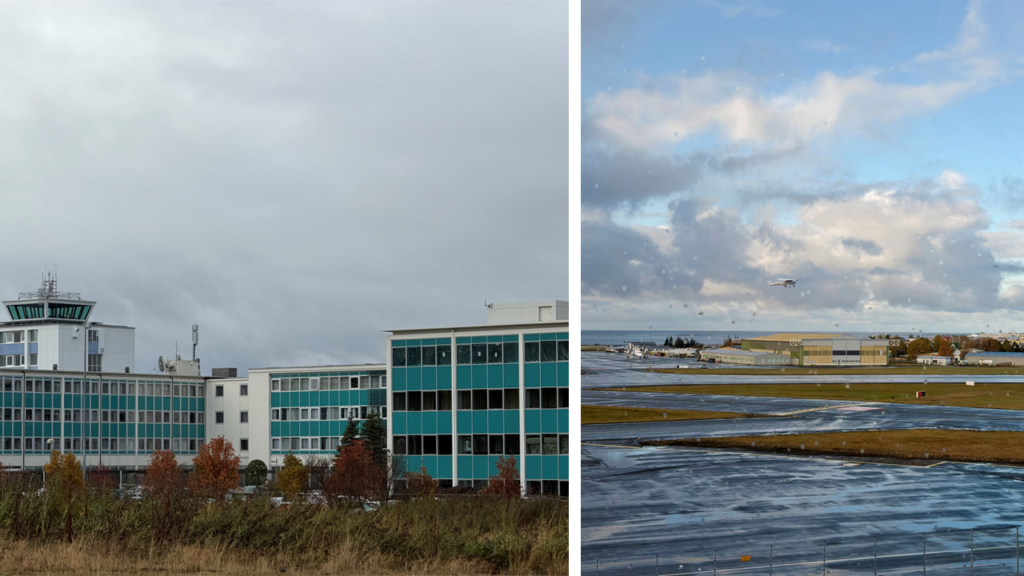
Planes from Reykjavík’s domestic airport pass low over Nauthólsvegur. For decades, the building beside the runway was Icelandair’s headquarters. Now the desks are gone. In May 2025, Iceland’s Social and Housing Minister Inga Sæland and Reitir’s CEO Guðni Aðalsteinsson took sledgehammers to the first wall. By mid-2027, the converted building will open as a nursing home with 87 rooms, each with a private bathroom and a small kitchenette.
In the Arctic, resilience is not only about cables and runways. It is also about whether a small, ageing society can care for its people. In many Arctic regions, more than one in five people are already over 65. Iceland has fewer long-term care beds per 1,000 people aged 65 and over than its Nordic neighbours, and estimates suggest the number must roughly double by 2040. Between 2017 and 2024, the number of people waiting for a nursing home place almost doubled, from 331 to 614.
Every new nursing home place builds Arctic resilience in its most human form. With long-term loans to Reitir and Heimar totalling around EUR 60 million, NIB is helping add care capacity across Iceland, from nursing homes in Reykjavík to a specialist health hub in Akureyri in the north. Ageing well also means staying mobile and independent for longer. Since 2001, NIB has backed Embla Medical, the Reykjavík-born mobility company, whose solutions help a growing number of older people worldwide keep moving.
From office desks to care beds
Back on Nauthólsvegur, Reitir has owned the building for about a decade. “When Icelandair moved out, we had two options: fix it all up and rent it out as offices again or do something else. We decided to do something else,” says Ari Þorleifsson, Project Manager in Construction at Reitir and lead for the conversion.
The decision fits the direction Reitir has chosen for its growth. Since 2024, the company has been evolving into a developer focused on what it calls socially useful real estate. With a vacant building in a good location and an urgent need for nursing home places, Nauthólsvegur was “an obvious match” for that strategy, and converting it was faster than building new. And it is not a one-off. Reitir is also building a 140-room nursing home in northern Iceland.
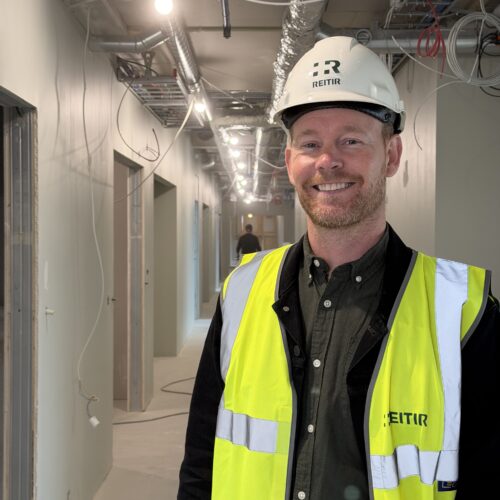
The ability to adapt existing assets to evolving needs is an important aspect of urban resilience.
Ari Þorleifsson
Project Manager in Construction at Reitir
The 1966 building had its challenges. It was stripped back to its concrete frame and glass façade, strengthened to meet today’s building code and fitted with new technical systems and larger elevators, and airport noise was measured for six weeks before the rooms were designed. But it also offers wide hallways, high ceilings and large windows – a real advantage where the midwinter sun is up for only about four hours. “The layout gives us big rooms and a lot of daylight, which supports the well-being of the people who will live here.”
Little went to waste. A local reseller of used building materials spent almost three months on site giving partitions, doors and fixtures a second life, and 8.5 tonnes of old carpet tiles went to certified recycling, avoiding an estimated 12 tonnes of CO₂. The 1960s façade, the original staircase and an artwork by a well-known Icelandic artist are being restored. For Reitir, “this ability to adapt existing assets to evolving needs is an important aspect of urban resilience.”
A neighbourhood for all ages
The nursing home is only the first step. On the same site, Reitir is planning a “quality of life community” with around 150 apartments for people aged 60 and over, a preschool and primary school for around 400 children, services and green areas, and shared spaces indoors and out. The City of Reykjavík, which had invited developers to propose such communities, approved a development agreement in December 2025, and detailed planning is under way.
“Research from the Netherlands and other countries shows that when you mix children and young people with older generations, older people stay more socially active and feel less lonely. This project will be the first of its kind in Iceland,” says Lára Hilmarsdóttir, Director of Communications at Reitir.
The location is part of the idea. “The aim is to reduce the isolation of older people. This location is in the middle of a lot of activity in the city and close to important services such as health care.”
Growing an existing home
Across town, Sóltún nursing home is growing while its residents live there. Heimar is expanding the building from 6,870 to 10,360 square metres, adding 67 rooms to the existing 92 – 159 in total.
“The home is very sought after and always full. New residents are already waiting for the rooms to open,” says Ólafur Hrafnkell Baldursson, Director of Construction at Heimar.
That shaped the whole project. “Treating this as a traditional construction site was not an option. People live here, in many cases in their final days.” Heimar built as much as possible off site. Concrete elements, roof units and walls with windows already installed arrived ready to be lifted into place.
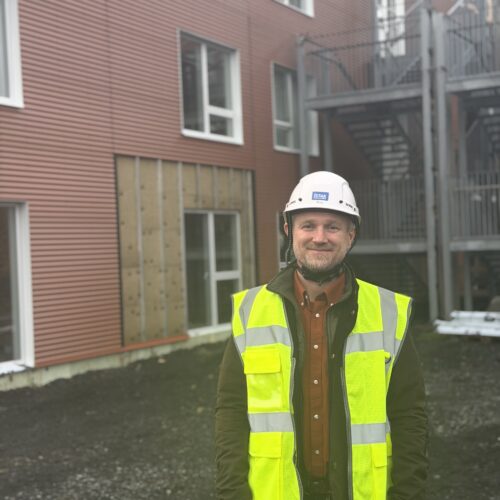
Care infrastructure is a very big focus in Iceland at the moment, and we want to be part of that conversation.
Ólafur Hrafnkell Baldursson
Director of Construction at Heimar
Why extend rather than build new? “It was a very well thought out building, fully operational, with all the service units. If you start from scratch, you have to add common areas, elevators, a kitchen and all kinds of facilities. Here the building could carry more rooms without big changes.” It also means new rooms sooner, while the need is urgent. The new rooms are planned to open around August 2027.
For Heimar, Sóltún is its first nursing home project, with more on the drawing board. “This is a very big focus in Iceland at the moment, and we want to be part of that conversation. We can offer high quality and deliver it in a short time.” The rooms are designed with the nursing home operator: “The best advice comes from those who run these places.”
Care as infrastructure
Together, the two projects will add more than 150 nursing home places in Reykjavík – about 5% of the 3,062 places Iceland had at the end of 2025. The government plans more than 1,500 new places by 2030, with new homes rising in the north too, in Akureyri and Húsavík. Every older person who gets the right care in the right place frees a hospital bed, gives a family peace of mind and keeps public finances steadier. Care, in other words, is part of what keeps Northern societies working.
“Northern communities live with long distances and few alternatives, so we invest in the links that hold them together such as power and transport. Care belongs on that list too. The people who built these communities should be able to grow old in them, and the children growing up there today should be able to picture doing the same,” says Stefán Jón Friðriksson, Senior Banker at NIB.
Old age in Iceland has even reached the big screen. The Ground Beneath Our Feet, a documentary filmed over the seasons at a nursing home in Reykjavík, won the Tromsø Palm in Arctic Norway and is Iceland’s Oscar entry this year. It shows old age not as decline, but as life being lived.